



Aqueous Ozone & Nanobubble Tech.
This project evaluated aqueous ozone combined with nanobubble technology to enhance the oxidation-reduction potential (ORP) of water and increase dissolved oxygen availability. By improving ozone stability and mass transfer efficiency, the system aimed to strengthen antimicrobial activity during postharvest sanitation. We investigated its potential as an effective alternative to conventional hydrocooling treatments using sodium hypochlorite in commercial peach packing houses and how this technology can be scaled for broader adoptionaffect peach quality.
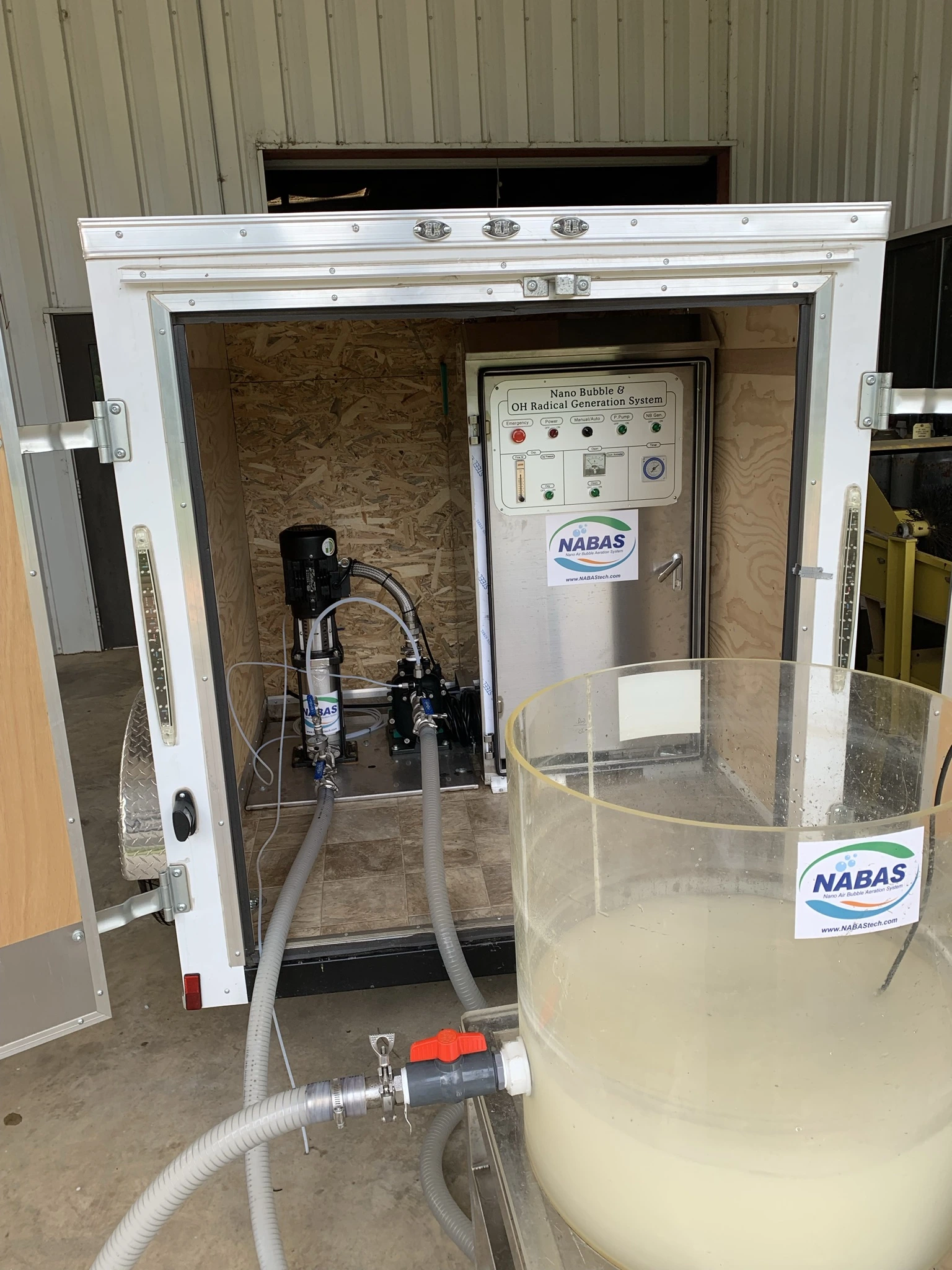
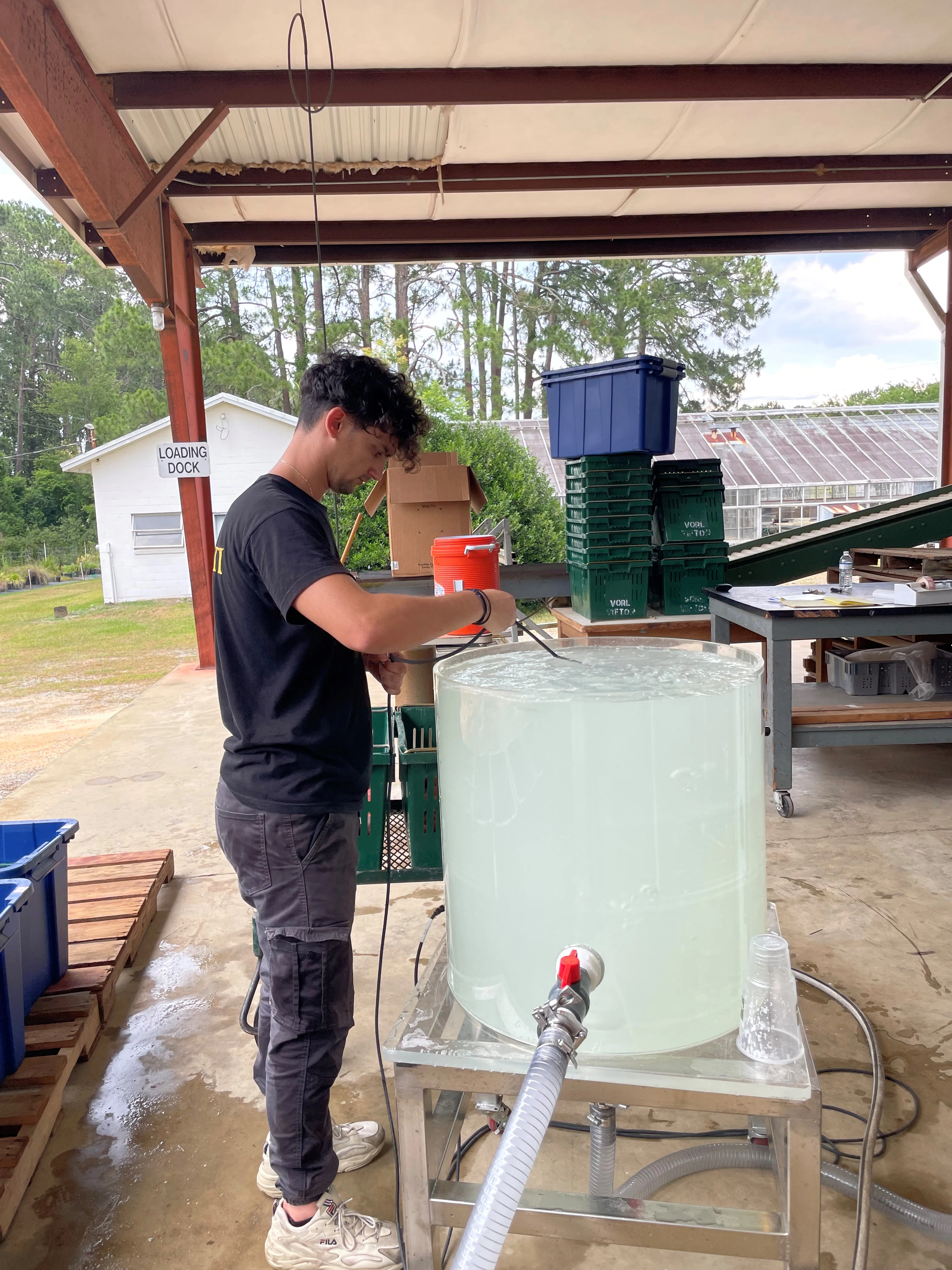
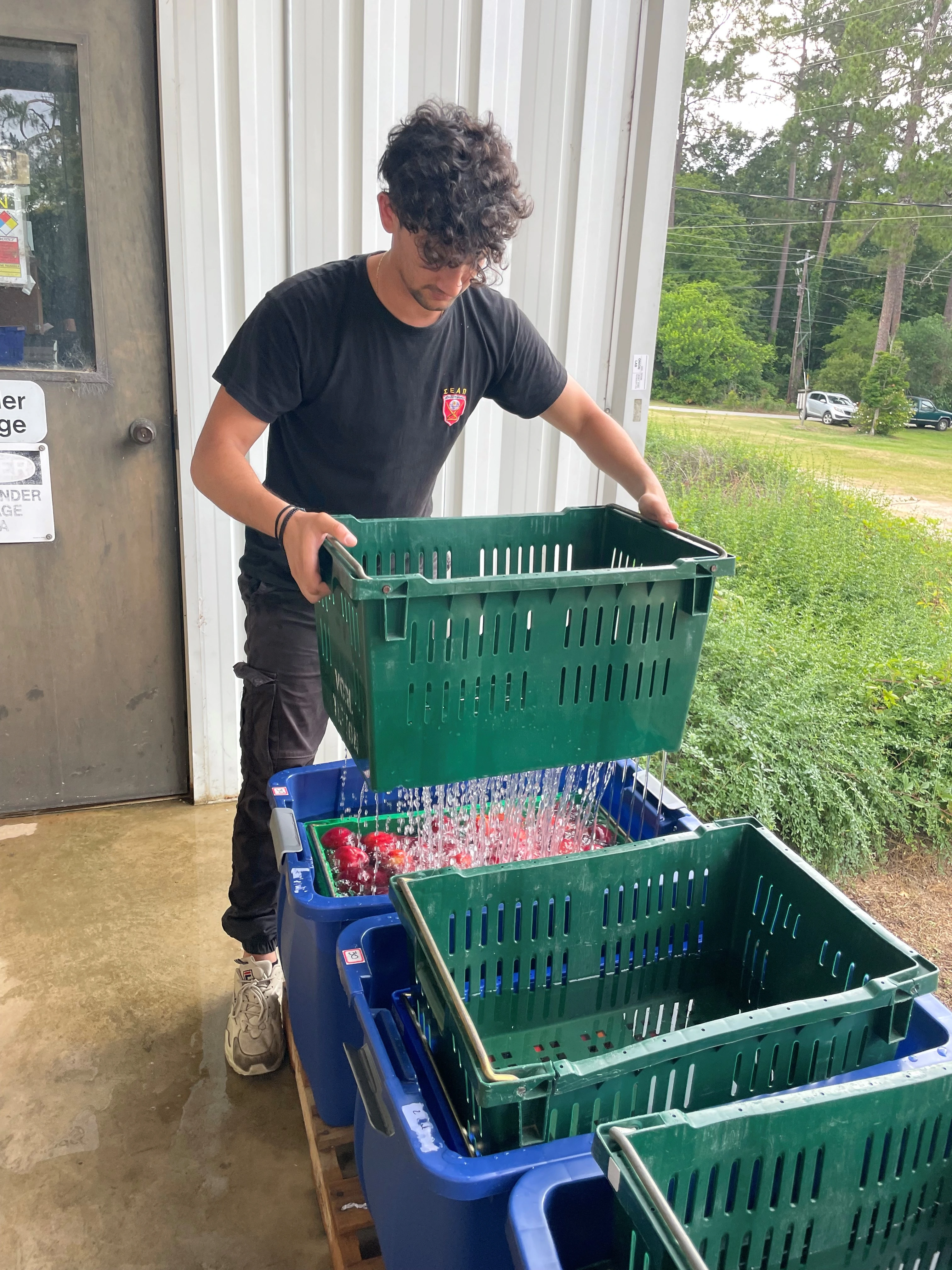
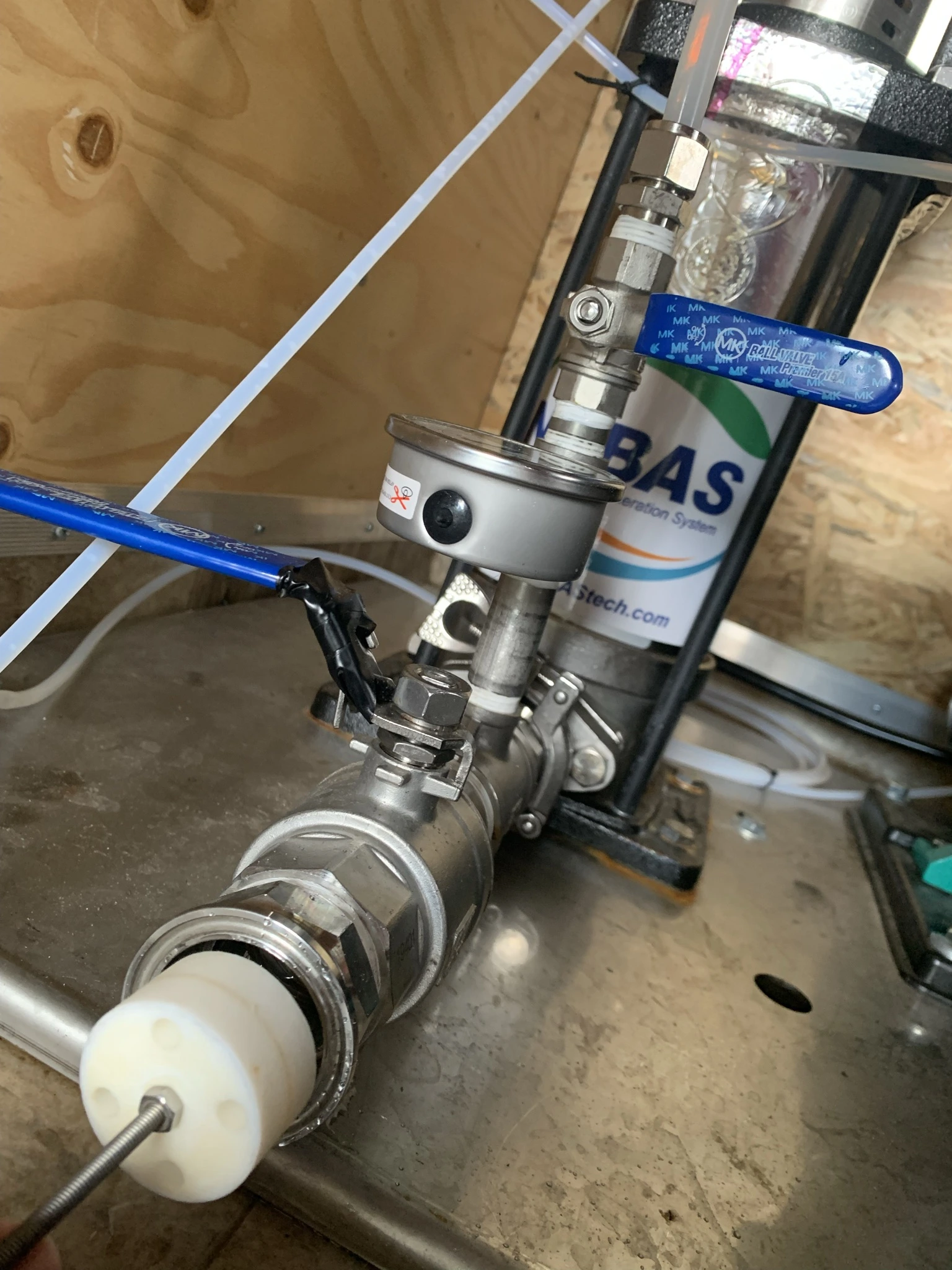
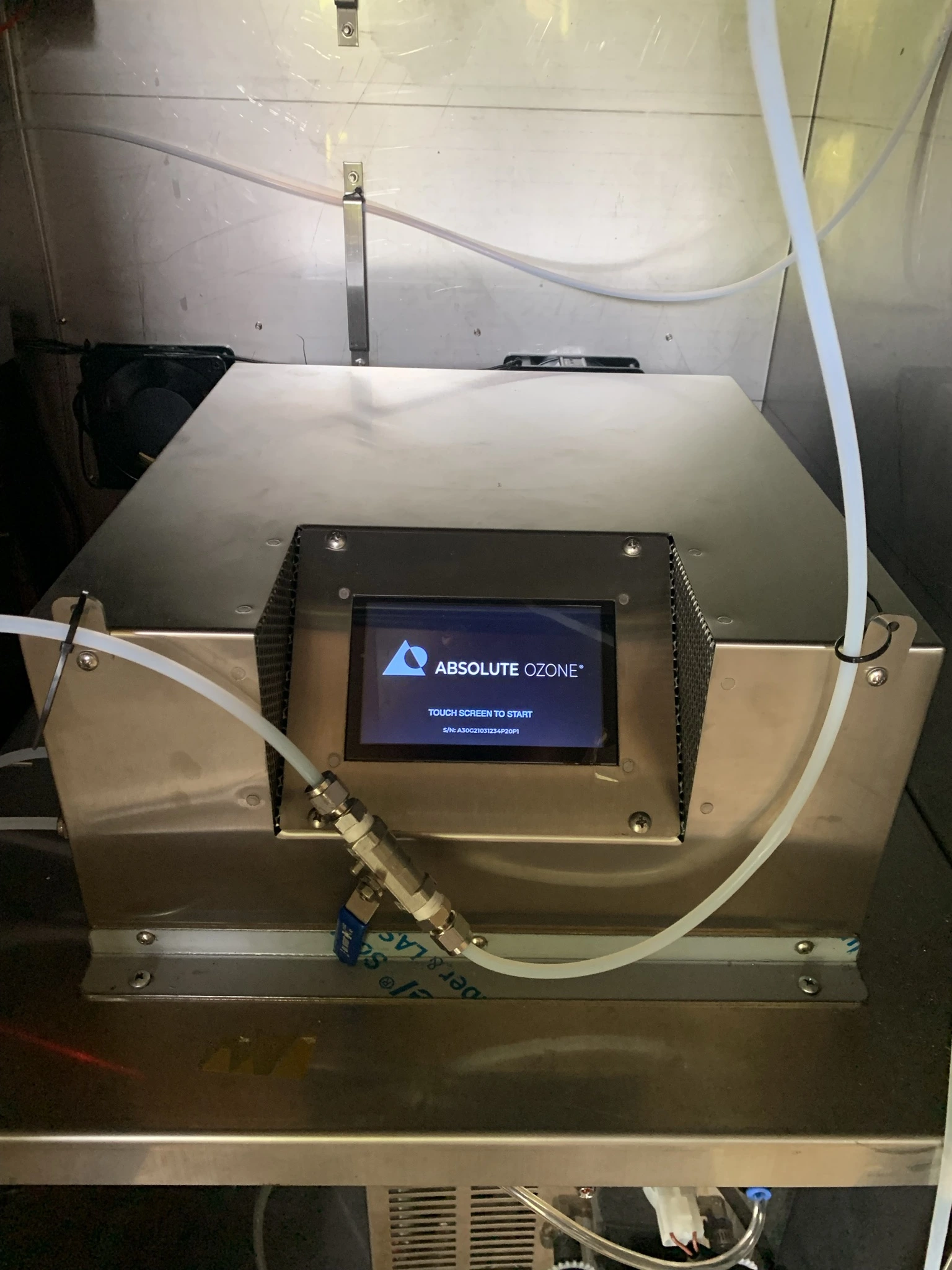
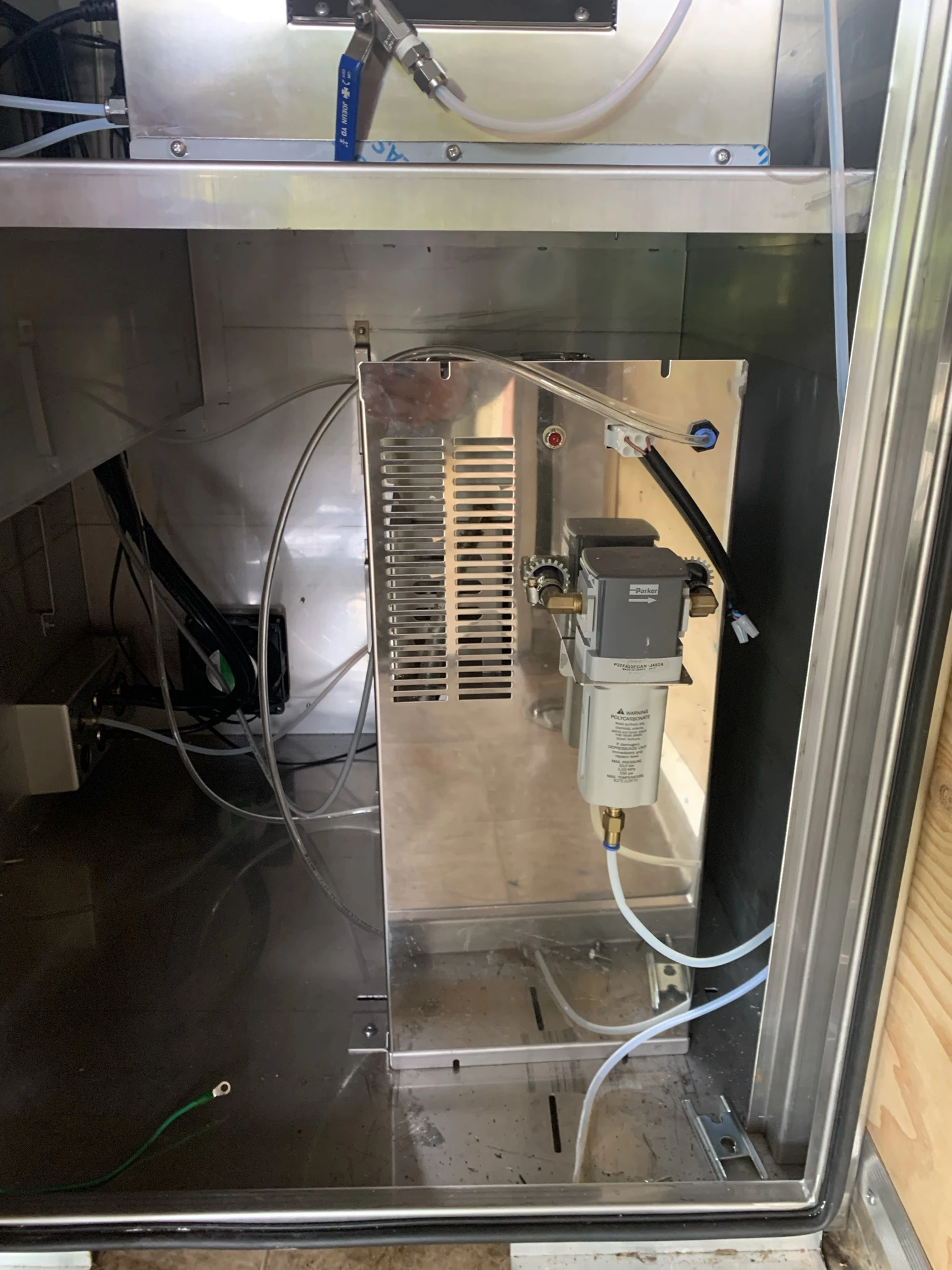

The ozone and nanobubble generator was provided by NABAS Technologies . This project was conducted as a collaboration between the University of Georgia and NABAS.
Visit NABASAqueous Ozone & Nanobubble Tech.
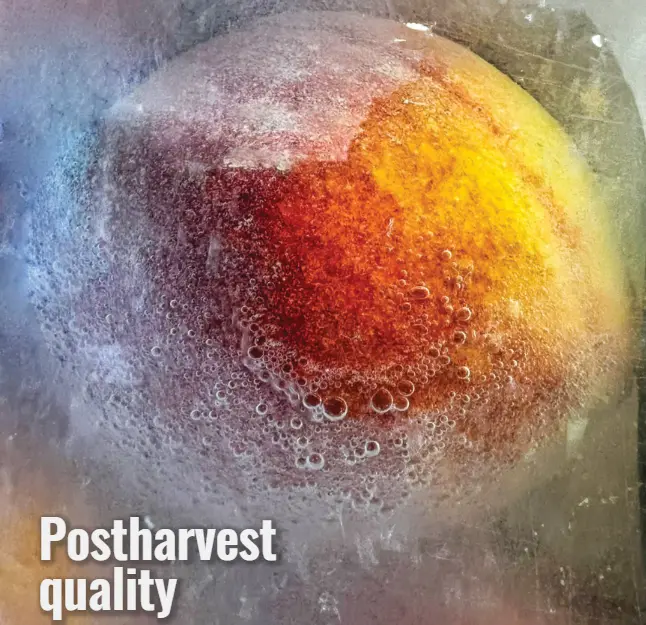
Aqueous ozone and nanobubble technology in postharvest fruit preservation to extend shelf life and maintain quality.
This project evaluated high-oxygen water (HOW) technology as a chemical-free alternative to sodium hypochlorite (NaOCl) for postharvest peach sanitation. The system combines oxygen nanobubbles with gaseous ozone to reduce microbial load during hydrocooling. Fruit were treated at different dissolved oxygen concentrations and compared to standard chlorine treatments to assess decay incidence and quality retention. Results showed that moderate HOW treatments maintained fruit quality, while excessive ozone concentrations negatively affected decay outcomes.
Peach packing operations rely heavily on chemical sanitizers such as sodium hypochlorite to control microbial contamination during hydrocooling. However, increasing regulatory concerns, chemical residues, and potential negative effects on fruit quality highlight the need for safer and more sustainable alternatives. The challenge was to develop a sanitation system capable of reducing microbial populations without compromising postharvest quality or increasing decay susceptibility.
High-oxygen water (HOW) was developed using stable oxygen nanobubbles combined with controlled ozone concentrations to enhance microbial reduction during hydrocooling. Different dissolved oxygen levels were tested and compared to standard NaOCl treatments. Results showed that moderate HOW treatments maintained fruit quality while providing effective sanitation, although excessive ozone concentrations negatively affected fruit quality. These findings support the potential of nanobubble-based sanitation systems as a promising alternative for postharvest operations when properly optimized.
Key Features
- Real-time Solution Monitoring
- Potential Alternative to Chlorine Sanitization
- Integrated Ozone (O3) Delivery System
- Residue-Free Sanitation Approach
- Compatible with Existing Hydrocooling Systems
- Sustainable Postharvest Technology