



Chilling Injury in Postharvest Fruit
This project examines how cold storage temperature and storage duration influence chilling injury development and overall postharvest quality of fresh-market peaches. By comparing commercially relevant storage conditions across multiple cultivars, the work provides practical guidance for managing quality risks during storage and distribution.
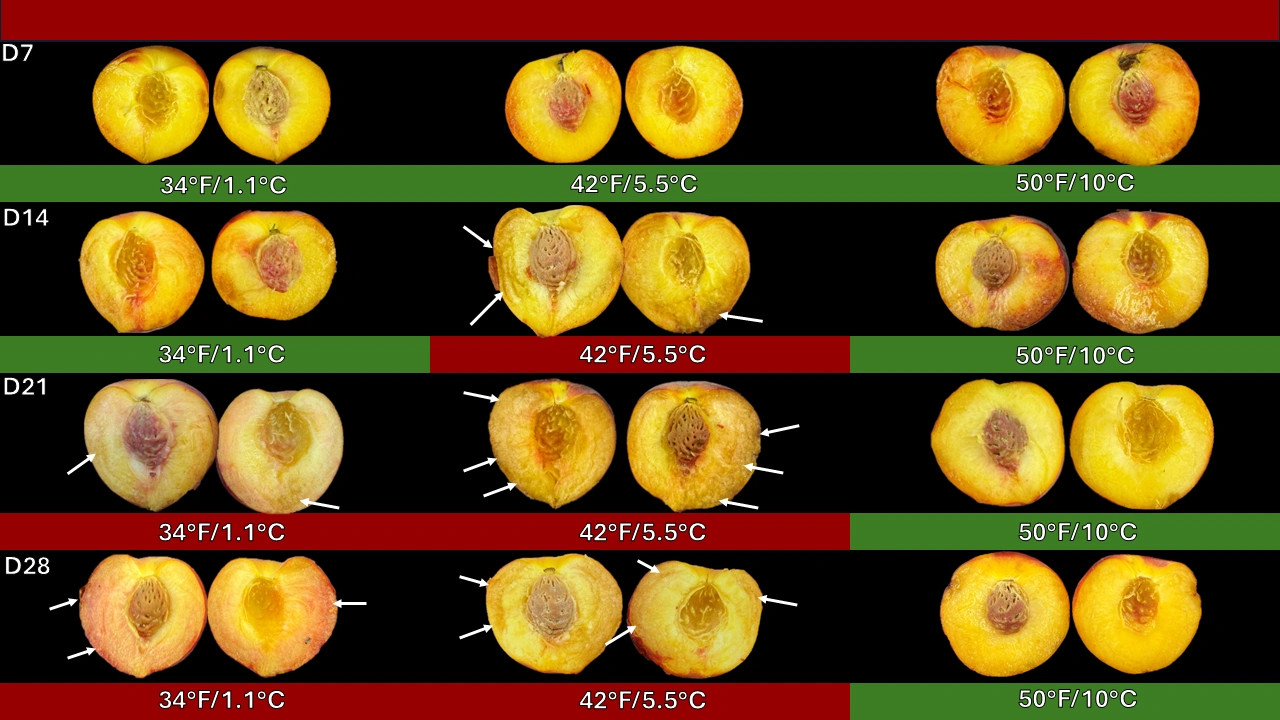
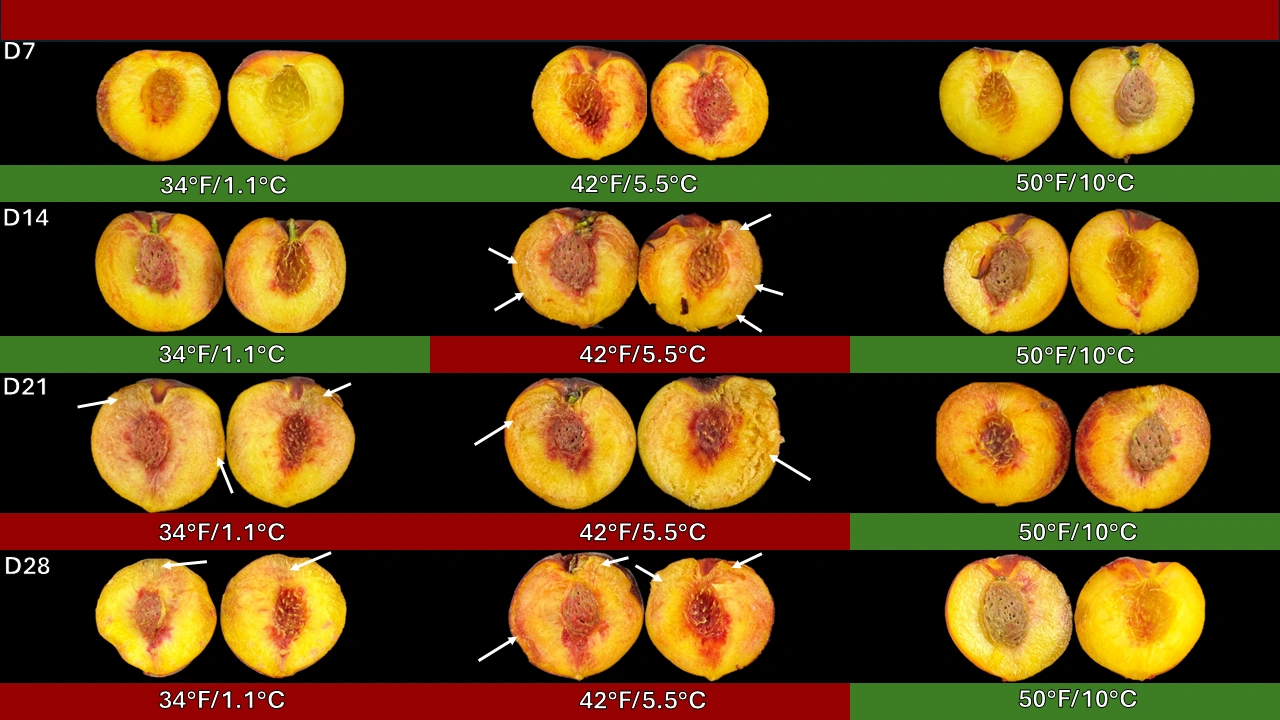
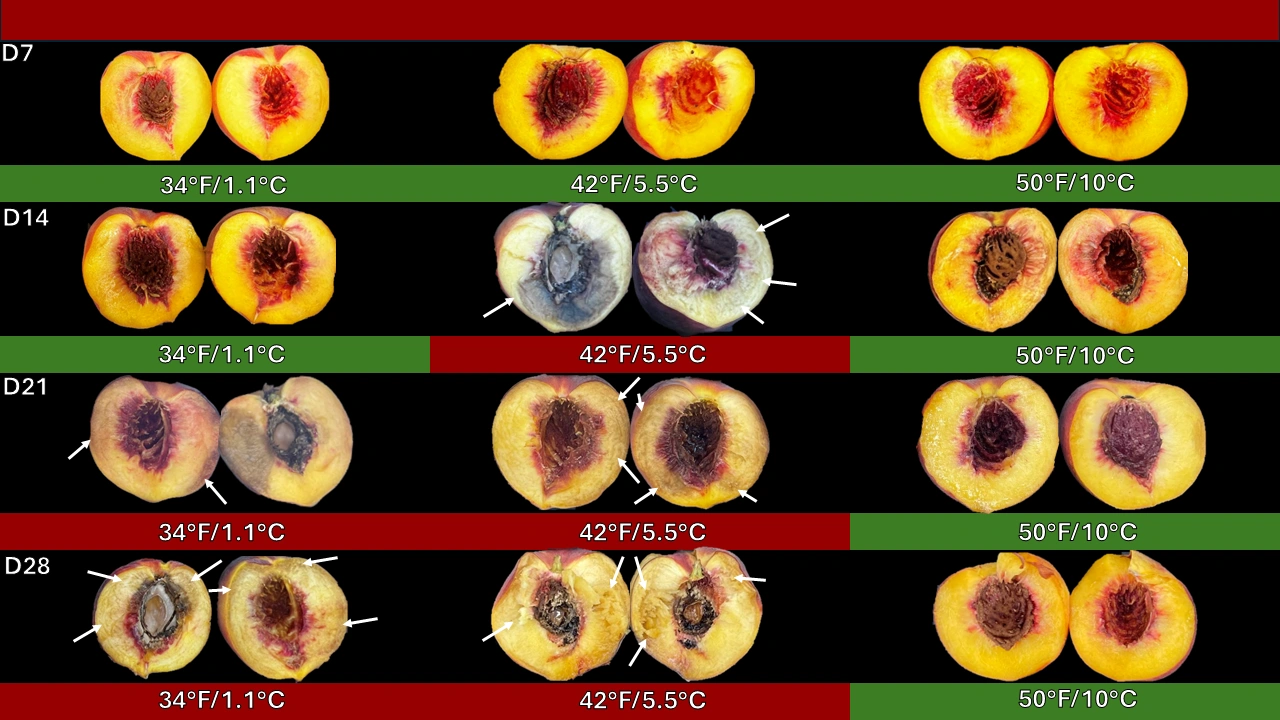



Chilling Injury in Postharvest Fruit
Research on chilling injury susceptibility in postharvest fruit and its impact on quality and shelf life.
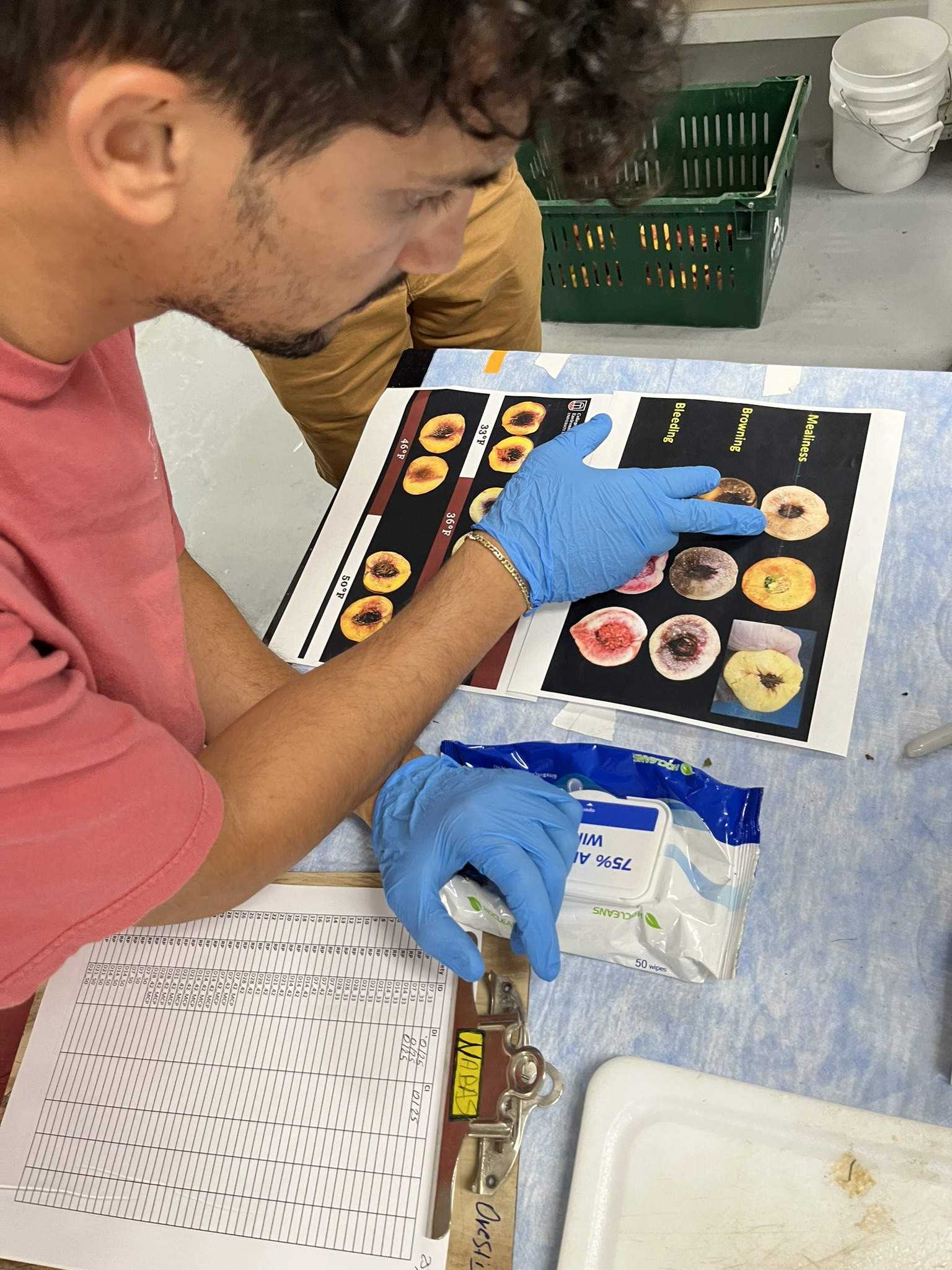
This study evaluated three commercial peach cultivars, Blazeprince, Rich Pride, and O'Henry, stored for up to 28 days at 1.1°C, 5.5°C, or 10°C (90% RH), followed by 3 days at 20°C to simulate market conditions where chilling injury becomes visible. Quality was monitored using decay incidence, chilling injury incidence, firmness, respiration rate, weight loss, flesh color, and total soluble solids. Chilling injury was most severe at 5.5°C, but symptoms also developed after prolonged storage at 1.1°C, while 10°C avoided chilling injury but increased softening, weight loss, and decay risk.
Peach cold storage is required to slow ripening and maintain marketability, but peaches are highly sensitive to chilling injury, especially within the 2.2°C to 7.7°C "killing zone" where internal quality can deteriorate and symptoms often appear only after fruit are moved to ambient temperatures. The challenge was to identify temperature and duration combinations that balance chilling injury risk against decay, water loss, and rapid softening during storage and distribution.
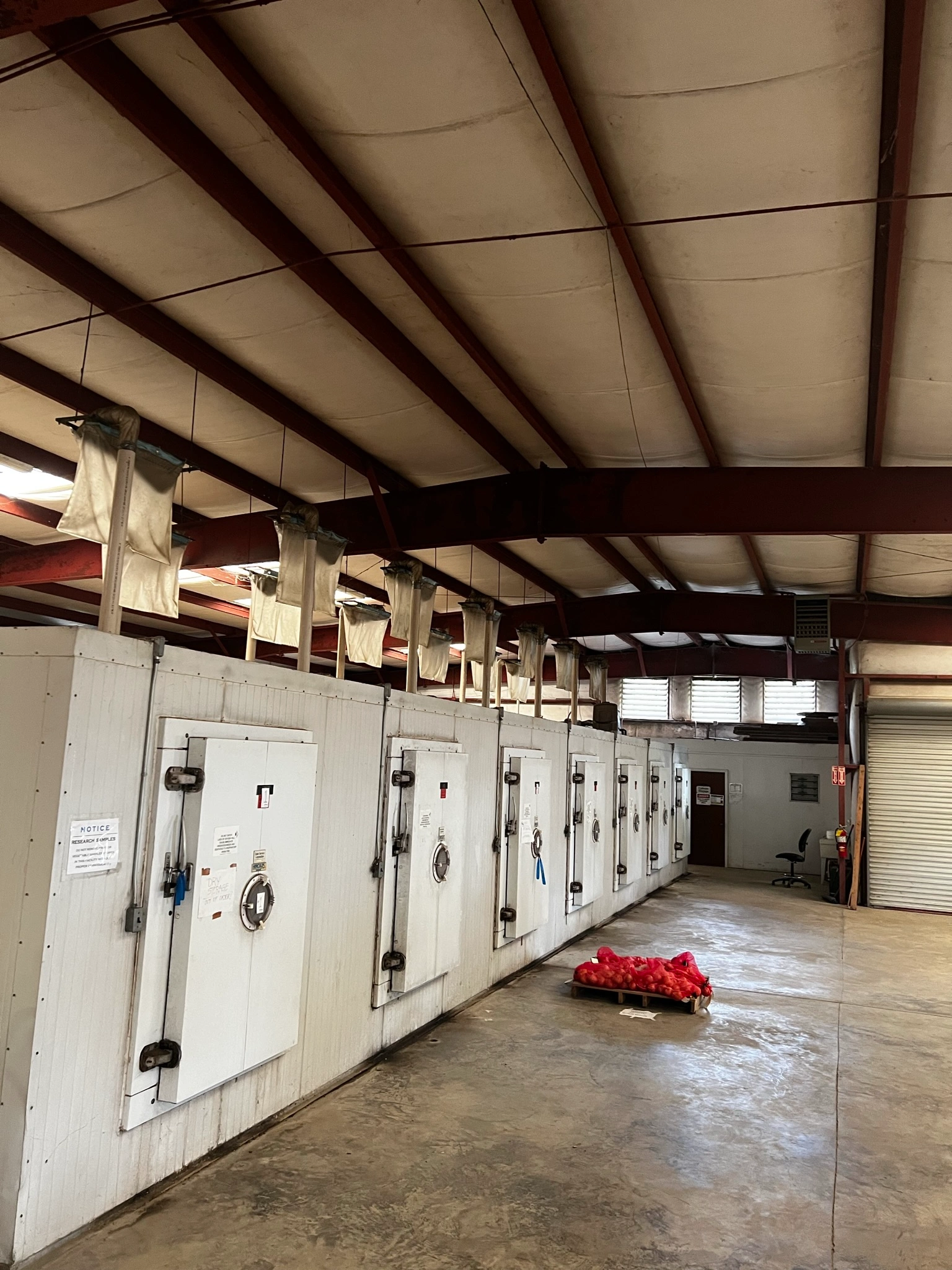
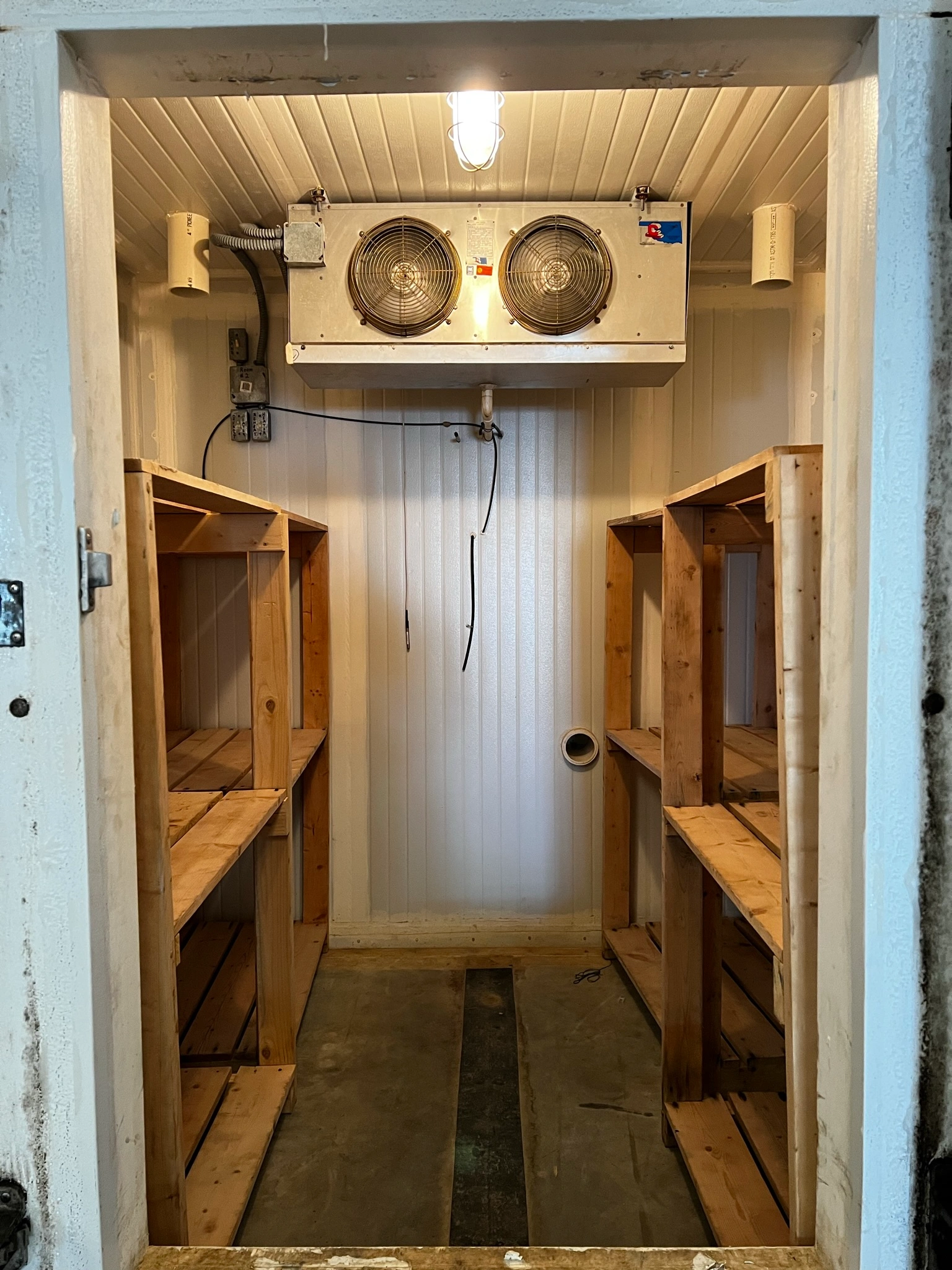
We compared three storage temperatures representing a commonly recommended cold storage setting (1.1°C), a "killing zone" temperature (5.5°C), and a warmer condition above the killing zone (10°C) across 7, 14, 21, and 28 days. A post-storage holding period at 20°C was included to trigger chilling injury expression under realistic market conditions. This design allowed clear identification of temperature risk zones, cultivar-dependent responses, and practical storage limits for commercial handling.
Key Features
- Temperature risk mapping
- Killing zone validation
- Cultivar comparisons heapsm
- 28-day storage timeline
- Market simulation hold
- CI, decay, firmness tracking